When to visit Osaka:
the calendar tells the truth.
Best overall: late October to mid November — 18–24°C, low rain, autumn colour, typhoon risk fading and prices below sakura levels. Second: late March to mid April for cherry blossoms (2026 opened around 23 March, best viewing roughly 1–7 April — dates shift with every forecast revision, so never book around a single day). Third: mid April to mid May, the post-sakura sweet spot, minus Golden Week (29 April–6 May), when the whole country travels at once. The hard avoid is late July to mid September: after three record summers, Osaka afternoons at 36–38°C and 70% humidity are a health problem, not a packing problem.
Twelve months, scored honestly
By monthHow to book cherry blossom season without gambling
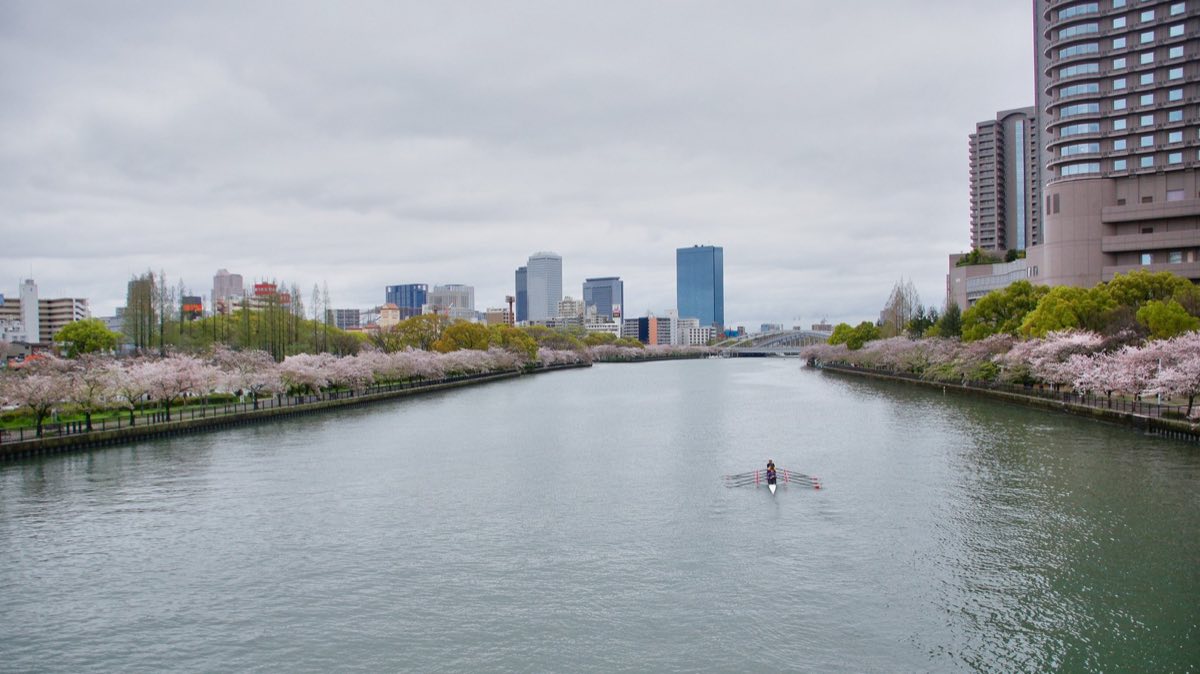
Sakura, done rightBloom dates are a forecast, not a fixture: they depend on February–March temperatures, and Japanese forecasters revise their predictions roughly weekly from January — the 2026 season saw at least 14 revisions before Osaka opened around 23 March, with best viewing about 1–7 April. Opening to full bloom takes ~7 days, and full bloom holds about a week if rain behaves. So book a 5–7 day window in the last week of March through the first week of April, refundable rooms, and let the trees decide the details. Rooms for that window sell 3–4 months out at a 30–40% premium.
One genuinely useful Osaka edge: Osaka tends to bloom slightly ahead of Kyoto — in a late season, basing here puts you in blossom a day or two sooner, and the castle park's ~3,000 trees with the Nishinomaru evening illumination (¥350, 18:00–21:00) are a first-division hanami site. The castle page has the details →
An August day in Osaka, hour by hour
Hour clockOsaka summers are now genuinely dangerous: 2025 was the hottest since records began in 1898, afternoons run 36–38°C at 70% humidity, and nights stay above 25°C. From late July to mid-September, plan indoor afternoons and treat 10:00–17:00 as heat-illness territory, not sightseeing time.
Peak: 36–38°C on pavement, hotter in Dotonbori's canyon. Nothing outdoors is worth this — Kaiyukan, Housing Museum, USJ's indoor queues.
September's typhoon tax
The other riskSeptember is Osaka's highest-risk month for itinerary damage: typhoon season peaks August to early October, and a direct or near approach means 24–48 hours of suspended shinkansen, grounded flights and shuttered attractions — not danger, mostly, but paralysis. If you travel in typhoon season: buy flexible tickets, don't book must-make connections (a KIX departure the morning after a Tokyo shinkansen leg is asking for it), follow JMA warnings from ~5 days out, and hold one padding day. Travel insurance that covers weather delay stops being optional — the practical page covers it.
Festivals and events worth planning around
The calendar's fixed points| When | What | The one-line truth |
|---|---|---|
| 24–25 July | Tenjin Matsuri | One of Japan's three great festivals — river boat processions and fireworks on the 25th. Book rooms months out; expect the heat |
| Mid–late Sept | Danjiri Matsuri (Kishiwada) | Teams sprint 4-tonne wooden floats around corners — thrilling, genuinely hazardous, 30 min south by Nankai |
| March (2 weeks) | Grand Sumo Spring Basho | The one Osaka window to see sumo for real at EDION Arena — tickets sell out; book the day sales open |
| Nov–Dec | Midōsuji Illumination | 4 km of the main boulevard lit end to end — free, and the season's rooms are cheap once foliage week passes |
| 29 Apr–6 May | Golden Week — avoid | Japan's national holiday cluster: domestic crowds triple, rooms +30–40%, USJ at its worst. The anti-festival |
Dates verified August 2026; Danjiri weekend shifts year to year — confirm before booking around it.
Timing questions, answered straight
FAQPage schema pairedWhat is the best month to visit Osaka?
November — specifically late October through mid November: 18–24°C days, the year's most reliable dry weather, autumn colour at Minoh and the castle park in the last week, and room rates a tier below sakura season. If November fails, mid April to mid May minus Golden Week is the runner-up.
When is cherry blossom season in Osaka?
Typically opening in the last week of March with best viewing in early April — 2026 opened ~23 March and peaked roughly 1–7 April. Forecasts revise weekly from January, so book a flexible window across the March–April turn rather than betting a fixed date. Osaka blooms a touch before Kyoto in most years.
Is August a bad time to visit Osaka?
It's the hardest month, honestly: 2025 was the hottest summer since records began in 1898, and normal Augusts now run 36–38°C afternoons at 70% humidity with nights above 25°C. Trips work if you restructure — outdoor sightseeing before 10:00, indoor afternoons, neon evenings — but anyone with a free choice of dates should take October instead.
Is Golden Week a bad time to visit Japan?
For a foreign visitor, yes: 29 April–6 May is when all of Japan travels domestically — trains book solid, rooms jump 30–40%, and USJ hits its worst crowds of the year. Either side of the window is lovely; mid-May might be the most underrated week on the calendar.
When does it rain most in Osaka?
June — tsuyu, the rainy season, runs early June to mid/late July: ~185 mm, the year's fewest sun hours, and relentless humidity rather than all-day downpours. It's workable (museums, arcades, food) and cheap, but it's nobody's first choice. September's rain comes as typhoons instead.
Is winter worth it in Osaka?
More than most expect: December–February is cold (3–10°C) but dry and clear, rooms and flights hit their annual floor, USJ's late-January–early-March window has the year's shortest queues, and the Midōsuji illumination runs to the end of December. Pack layers, eat hotpot, enjoy the discount.