Things to do in Osaka,
stamped and priced.
The famous complaint — "all concrete and shopping streets" — is half right, and the wrong half is why you come. Osaka's individual sights mostly rate DEPENDS: the castle keep is a 1931 concrete museum, the tower views are ¥2,000 commodities, the market is a queue after 11:00. What rates WORTH IT is the city at street level — Dotonbori at dusk, Shinsekai at night, Tsuruhashi's yakiniku smoke, dinner for ¥3,000 that costs triple in Tokyo. The ranking below gives every entry a stamp, both currencies and the exact station exit. Prices verified August 2026.
"All concrete and shopping streets" — answered
The anti-caseThe most-repeated line about Osaka on the internet deserves a straight reply, not a brochure.
The criticism is real and half correct: Osaka has no Fushimi Inari, no golden pavilion, and its most famous castle is a reconstruction. If your trip is a checklist of monuments, Kyoto is 28 minutes away and you should sleep there — we say so plainly.
The half that's wrong: Osaka is a city you eat and walk, not one you tick off. The travellers who rate it lowest are the ones who did the keep, the aquarium and a tower in one sweaty loop and left. The ones who rate it highest found Tenma at 19:00, Hōzenji Yokochō by lantern light, the ¥970 airport train and a ¥3,000 dinner that out-cooked their Tokyo splurge. One traveller put it exactly: Osaka feels like you need local friends to tell you where to go. That's this page's job — the list below is filtered, stamped and priced, and a surprising amount of it is free.
The 15 decisions, in order
RankedDotonbori & Hōzenji Yokochō
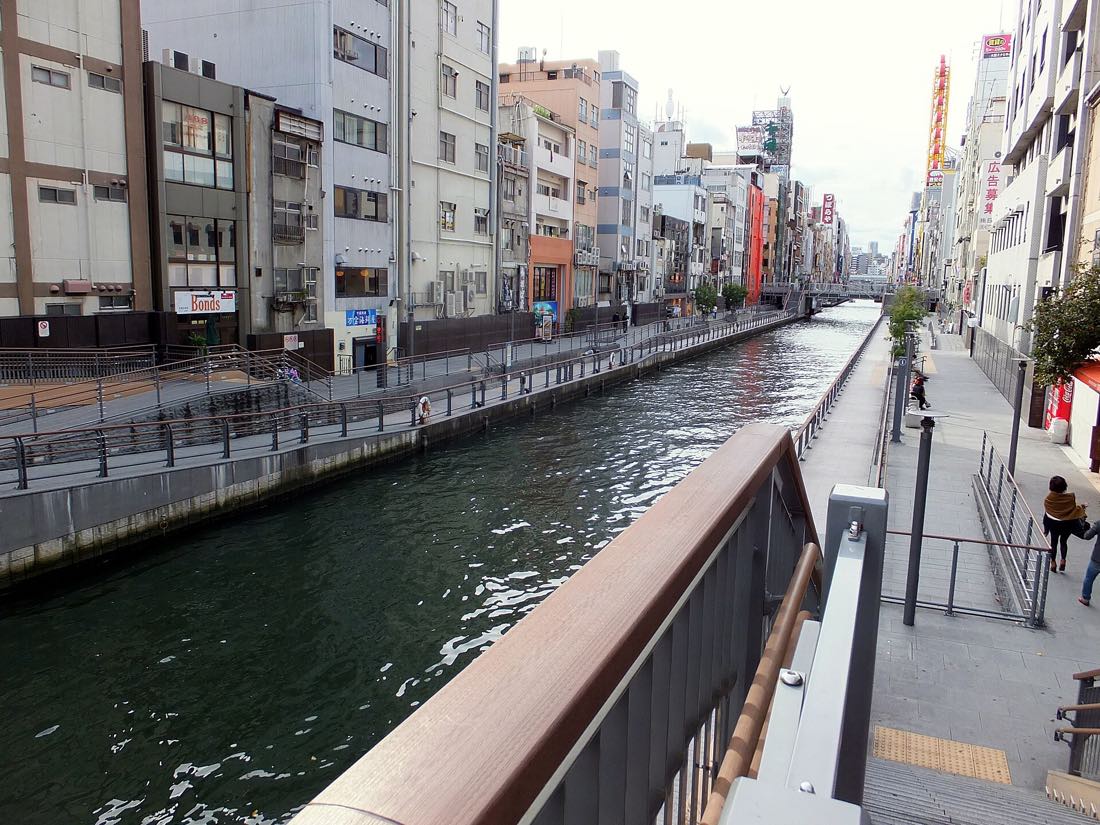
Go at dusk for the neon, shoot the Glico sign from Ebisubashi, then walk one block out to eat — the five-language menus on the strip are for looking, not dinner. Hōzenji Yokochō's moss-covered Fudō statue is old Osaka 30 metres from the chaos.
Osaka Castle
The park and moats are world-class and free; the keep is a 1931 concrete museum with an elevator. The ¥1,200 ticket — doubled in April 2025 — now includes the genuine Toyotomi Stone Wall Museum, which is the one real reason to pay.
Universal Studios Japan
The best Universal park outside the US, and a full day minimum. Ticket booths closed permanently in May 2025 — everything is bought online, and from 1 September 2026 prices re-adjust daily with demand. Skip it on a 7-day first Japan trip unless theme parks are the point.
Umeda Sky Building
The escalator across the void and the 360° open-air roof at 173m beat Harukas on atmosphere despite being lower. Go for sunset — and note the Amazing Pass covers it free only 09:30–15:00, which is the trap.
Kaiyukan
One of the world's largest aquariums and the most reliable family half-day in the city. The central Pacific tank with the whale sharks justifies the price on its own, and it works in any weather.
Museum of Housing and Living
A full Edo-period streetscape rebuilt indoors, with day-to-night lighting cycles and kimono rental. Recommended unprompted by travellers more often than almost anything else in Osaka, and the city's #1 rainy-day pick.
Kuromon Ichiba
A working market before 11:00, a tourist queue after. Go on a weekday morning, budget ¥2,000–4,000, buy where Japanese shoppers line up, and walk past the ¥2,000 melon slice.
Tsūtenkaku & Shinsekai
Come for the retro-Shōwa district, the kushikatsu and the neon, not the 103m view — Harukas and Umeda Sky both beat it. The ¥1,000 exterior slide is the honest reason to give the tower any money.
Abeno Harukas 300
Osaka's tallest building — no longer Japan's, whatever older copy says; Azabudai Hills took that title in 2023. Higher than Umeda Sky but less atmosphere. The one condition where it wins outright is rain, because it's fully glassed in.
Temples & shrines
Shitennoji dates to 593 AD — Japan's oldest officially administered temple — Sumiyoshi Taisha's architecture predates Chinese Buddhist influence, and Namba Yasaka's giant lion head takes five minutes. Pick two. This is not Kyoto and doesn't pretend to be.
teamLab Botanical Garden
An after-dark light installation across a real botanical garden — a genuinely different evening if dinner ran early. It's an outdoor garden, so check the sky before you commit.
Tsuruhashi Koreatown
Japan's largest Korean community and the yakiniku capital of Osaka at well below Minami prices — the grilling smell reaches the platform. Cold noodles from ¥300, and a roofed market maze straight off the West Exit.
Minoh Falls
A 33m waterfall at the end of an easy forested river walk, half an hour from Umeda. The nature half-day travellers keep naming and English guides keep missing — late November foliage is the peak.
Sumo
The Grand Sumo Spring Tournament fills EDION Arena every March; the rest of the year, staged sumo shows with chanko hot pot run near-daily and sell out. One of the few categories in Osaka where booking a tour genuinely beats DIY.
Expo '70 Park & the Tower of the Sun
Tarō Okamoto's 70m, three-faced Tower of the Sun is the defining icon of postwar Japanese design, standing in a huge park with a world-class ethnology museum. Interior tours need online booking weeks ahead; closed most Wednesdays outside spring and autumn.
Umeda Sky vs Harukas — pick one
Paying ¥4,000 for two observation decks in one flat city is a tourist tax you charge yourself. Umeda Sky for atmosphere and sunset, Harukas for height and rain — the full comparison settles it in two minutes.
The 2026 numbers behind the ranking
The numbersTickets, without the ticket-window queue
Book the paid onesOnly a handful of entries above cost real money — these are the two places to buy them.
Things to do in Osaka — the questions everyone asks
FAQPage schema pairedHow many days do I need in Osaka?
2–3 days for the city itself is the modal community answer, and it's right — add a full day for USJ and a day per day trip. The counter-argument is real but minority: Umeda, Tenjinbashisuji, Namba Yasaka and the castle park fill a fourth day without repeating anything.
Is 2 days enough for Osaka?
For the city, yes — one day Minami (Dotonbori, Kuromon, Shinsekai), one day Kita and the castle. It stops being enough the moment USJ enters the plan, because the park eats a day whole. Three days is the comfortable version.
What is Osaka famous for?
Food, first and always — the Edo-period nickname is 天下の台所, "the nation's kitchen," and the local creed is kuidaore, eating yourself bankrupt. After that: Dotonbori's neon, USJ, the castle park, and 59 Michelin Bib Gourmands — more than Kyoto.
Is Dotonbori worth it?
As a free sight at dusk, absolutely — it's the Times Square of Japan and the neon over the canal is the postcard. As a place to eat, mostly no: walk one or two blocks to Hōzenji Yokochō, Ura-Namba or Sennichimae and pay ¥1,500 less for better food.
Is Osaka crowded in 2026?
The least crowded non-pandemic year since 2020. Japan's H1 2026 arrivals fell 2.0% — the first non-pandemic decline in six years — driven by Chinese arrivals dropping 56.4%. The heavy-tour-group stops (Kuromon, Dotonbori, USJ) feel it most.
Is Osaka worth visiting or should I skip it?
Depends who you are: 5/5 for eaters, families with USJ plans and base-and-day-trip travellers; 2/5 for temple-hunters on a first 7-day Japan trip. The full argument — including why 2026 specifically is the best year in a decade — gets its own page.