The museum Osaka
keeps to itself.
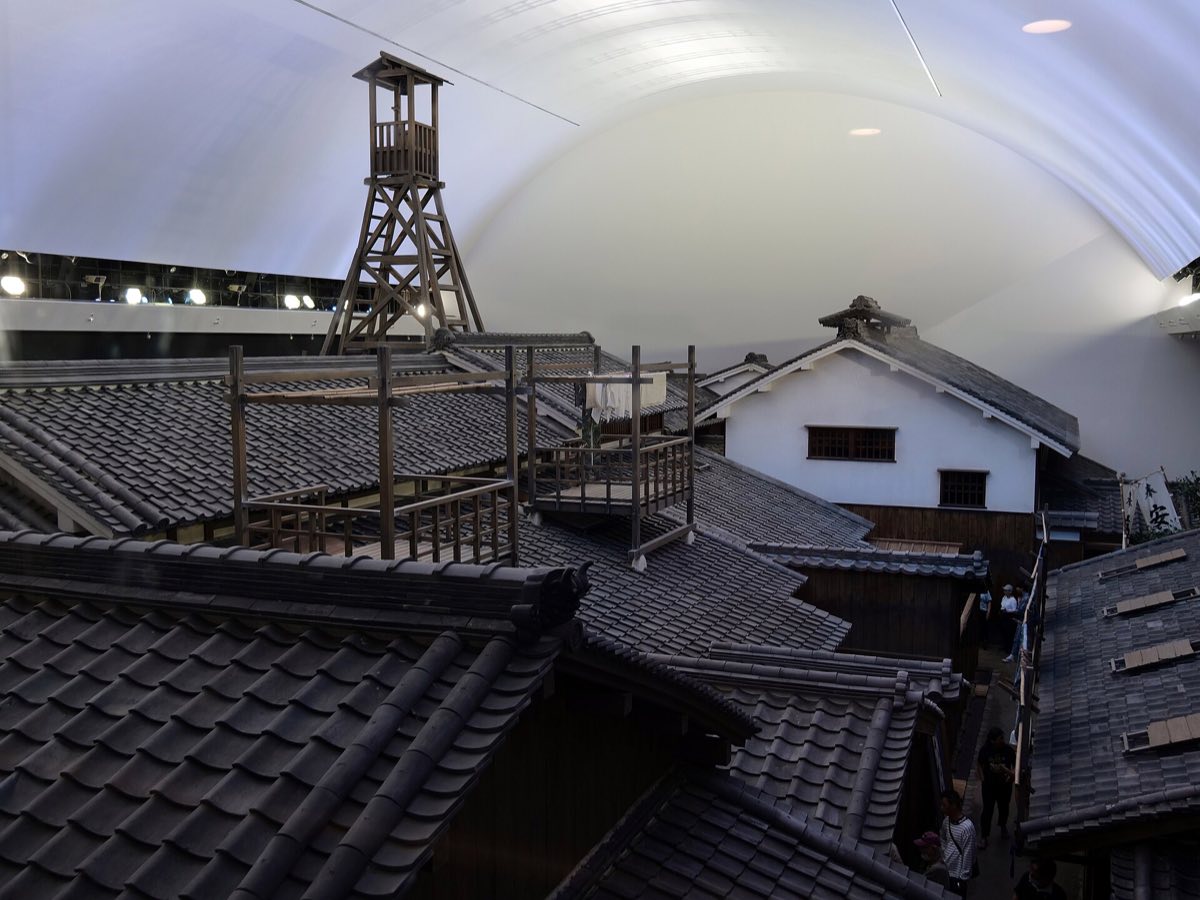
Yes — for roughly ¥600 (under $4) this is Osaka's best-kept indoor attraction. The top floors of an unglamorous tower hold a full-scale 1830s Osaka merchant street rebuilt to the roofline: you walk into the shophouses, the bathhouse and the alleys while the lighting cycles from dawn to fireworks-lit night overhead. Rent a kimono for a small fee and the photos do the rest. It surfaces repeatedly in traveller threads as the thing people wish they'd known about — the rare Osaka sight that beats its Kyoto equivalents on both price and crowd. The classic rainy-day and heat-wave save.
Is it for you?
Who it suitsA city that lost its past, rebuilt at 1:1
Why it's underratedOsaka was firebombed to the ground in 1945, which is why it 'has nothing old to see.' This museum is the workaround — and travellers who find it keep saying so.
The core is the 9th-floor recreated 1830s merchant street: full-height machiya townhouses, a bathhouse, a drugstore, a toy shop, roofed alleys with laundry strung between them — all walkable, all touchable, under a ceiling that cycles the sky from dawn through sunset to a festival night with fireworks projected overhead every 45 minutes or so. The floor below covers Osaka's modern housing story through intricate scale models of the 20th-century city. It's the only place in town where pre-Meiji Osaka exists at full scale.
In the research for this site, the Housing Museum was recommended twice, unprompted, in Reddit threads — near-unique for an Osaka attraction outside the headline names. The usual phrasing is some variant of "nobody told me about this and it was a highlight." Meanwhile most English guides give it a line or nothing. That gap is your gain: even in peak season it stays workable while the castle queues.
Admission is around ¥600 — among the cheapest tickets in the city — and the kimono rental (a small extra fee, time-limited slots on busy days) is the sleeper feature: you wear it inside the period street, which beats any studio backdrop in Japan for the money. It sits directly above Tenjinbashisuji 6-chōme Station at the top of Tenjinbashisuji arcade — Japan's longest shopping street, 2.6 km of it — so the natural plan is museum first, then eat your way south toward Tenma.
Indoor Osaka, compared
The decision| Option | Price | Time | Verdict |
|---|---|---|---|
| Museum of Housing and Living walk-through Edo streetscape | ~¥600 | 60–90 min | WORTH IT |
| Osaka Museum of History by the castle · the 10F castle view | ¥600 | 60–90 min | WORTH IT |
| Osaka Castle keep museum floors in a concrete tower | ¥1,200 | 60–90 min | DEPENDS |
| Kaiyukan aquarium the family-scale option | ¥2,700 | 2–3 h | WORTH IT |
⚠ Housing Museum admission is 'around ¥600' — verify at the counter; kimono rental is a separate small fee with limited daily slots. Prices verified August 2026.
The practical bit
Plan your visitPair it, book it
Build the dayThe museum itself is a walk-up ¥600 — nothing to pre-book. The bookable value is what you wrap around it.
Housing Museum questions people actually search
FAQPage schema pairedIs the Osaka Museum of Housing and Living worth it?
Yes — it's arguably the best value ticket in Osaka at around ¥600. A full-scale 1830s merchant street rebuilt indoors, walk-in buildings, and lighting that cycles from dawn to a fireworks night. Travellers repeatedly name it the thing they wish they'd known about.
How much is the kimono rental at the Housing Museum?
A small fee on top of the ~¥600 admission, paid at the museum — slots are first-come and cap out on busy days, so go early if the photos are the point. You wear the kimono inside the Edo streetscape itself, which is the whole appeal.
How long does the Housing Museum take?
60–90 minutes covers the 9th-floor streetscape and the scale-model floor below at an unhurried pace. Add another hour if you walk the 2.6 km Tenjinbashisuji arcade south afterwards — the natural exit route toward Tenma's food streets.
What station is the Osaka Housing Museum?
Tenjinbashisuji 6-chōme, on the Tanimachi (T18) and Sakaisuji (K11) lines — the museum tower stands directly above the station, with signage from the concourse to the 8th-floor entrance. From Umeda it's minutes on the Tanimachi line.
Is the Housing Museum good for a rainy day in Osaka?
It's the rainy-day pick: fully indoors, cheap, central, 60–90 minutes, and connected to a covered 2.6 km shopping arcade for afterwards. Between it, Kaiyukan and the depachika food halls, a wet Osaka day is a solved problem.
Is the Housing Museum covered by the Osaka Amazing Pass?
It's one of the pass's included attractions — but at ~¥600 it barely moves the ¥3,500 pass math. Buy the pass for the expensive entries (Umeda Sky before 15:00, Tsutenkaku, the wheels) and treat this one as a bonus.